

- University
- Academic
- Schools/Vocational Schools
- Vocational School of Justice
- Vocational School
- Vocational School
- Department of Banking and Insurance (Turkish)
- Department of Computer Programming (Turkish)
- Department of Foreign Trade (Turkish)
- Department of Graphic Design (Turkish)
- Department of Interior Design (Turkish)
- Department of Construction Technology (Turkish)
- Department of Occupational Health and Safety (Turkish)
- Department of Media and Communication (Turkish)
- Department of Architectural Restoration (Turkish)
- Department of Radio and Tv Programming (Turkish)
- Department of Civil Aviation Cabin Services (Turkish)
- Department of Civil Aviation Transportation Management (Turkish)
- Department of Tourism and Hotel Management (Turkish)
- Department of Applied English Translation
- Vocational School Of Health Services
- Vocational School Of Health Services
- Department of Child Development (Turkish)
- Department of Physiotherapy (Turkish)
- Department of Paramedic (Turkish)
- Department of Opticianry (Turkish)
- Department of Medical Documentation and Secreteriat (Turkish)
- Department of Medical Imaging Techniques (Turkish)
- Department of Medical Laboratory Techniques (Turkish)
- Department of Elderly Care (Turkish)
- School of Applied Management Sciences
- School of Foreign Languages
- Faculties
- Faculty of Arts and Sciences
- Faculty of Fine Arts and Design
- Faculty of Law
- Faculty of Communication
- Faculty of Business
- Faculty of Engineering
- Faculty of Engineering
- Department of Computer Engineering
- Department of Biomedical Engineering
- Department of Electrical and Electronics Engineering
- Department of Industrial Engineering
- Department of Food Engineering
- Department of Genetics and Bioengineering
- Department of Aerospace Engineering
- Department of Civil Engineering
- Department of Mechanical Engineering
- Department of Mechatronics Engineering
- Department of Software Engineering
- Faculty of Health Sciences
- Medicine
- Graduate School
- Common Courses
- Schools/Vocational Schools
- Research
- Research Centers
- Library
- Smart Campus
- Technology Transfer Office
- İzmir Sciencepark
- Continuous Education Center (EKOSEM)
- Children's University
- Ethics Committee
- Teaching and Learning Center (EKOEĞİTİM)
- Psychology Application and Research Center
- Researcher Training Coordinatorship
- Research Collaborations And Innovation Coordinatorship
- Campus
- INTERNATIONAL
- Contact
- 25TH YEAR
VOCATIONAL SCHOOL OF HEALTH SERVICES
Department of Child DevelopmentTeaching Aims
EDUCATIONAL OBJECTIVES
EA1. Training Qualified and Competent Child Development Professionals:
To educate child development professionals who are experts in their field through science-based education; who are knowledgeable about and able to apply children’s rights; who possess ethical values and communication skills; who are aware of their legal responsibilities; and who are capable of working effectively within team environments.
EA2. Providing Practical Training Opportunities:
To enhance students’ professional skills in material design and use by reinforcing theoretical knowledge through early childhood education practices.
EA3. Developing Analytical-Creative Thinking and Problem-Solving Skills:
To improve students’ analytical and creative thinking and problem-solving abilities through learner-centered teaching approaches.
EA4. Supporting Professional and Personal Development:
To support students’ continuous development of professional knowledge and skills, and to educate individuals who can respond to changing workforce needs with innovative thinking skills, as well as a strong sense of social and community responsibility.
In line with these objectives, our program goals are listed below:
EDUCATIONAL OUTCOMES
1. Objectives for Training Qualified and Competent Child Development Professionals
Objective 1.1 To enable students to correctly apply fundamental theories and principles related to child development (physical, cognitive, language, social-emotional) in professional practice.
Objective 1.2 To train competent individuals who can conduct practice processes in accordance with children’s rights and professional ethics, and who are capable of applying current legal regulations in the field.
Objective 1.3 To enable students to communicate effectively and professionally with families, teachers, and related disciplines (e.g., psychologists, social workers) and to work in interdisciplinary teams.
2. Objectives for Providing Practical Training Opportunities
Objective 2.1 To equip students with the ability to plan, implement, and evaluate science-based activities addressing all developmental domains of preschool children.
Objective 2.2 To enable students to design safe, economical, and creative educational tools and toys based on the developmental characteristics of children and the needs of disadvantaged groups.
Objective 2.3 To ensure the effective use of digital tools and technologies in educational processes and material design.
3. Objectives for Developing Analytical-Creative Thinking and Problem-Solving Skills
Objective 3.1 To enable students to analyze behavioral or developmental problems encountered in educational settings and develop evidence-based solutions.
Objective 3.2 To support students in evaluating existing educational approaches and practices from the perspective of child welfare.
Objective 3.3 To design original learning environments that center on students’ interests and needs and promote curiosity and exploration.
4. Objectives for Supporting Professional and Personal Development
Objective 4.1 To develop the habit of following national and international developments, scientific publications, and new educational models in the field.
Objective 4.2 To guide students toward social responsibility projects aimed at raising awareness about topics such as child development and the prevention of child neglect and abuse.
Objective 4.3 To develop flexible professional skills that enable students to adapt to the changing labor market and various service areas (e.g., playgroups, NGOs, children’s homes, special education centers, etc.).
These objectives aim to train students of the Child Development Program as well-equipped, conscious, and professionally competent individuals.
NEWSALL NEWS


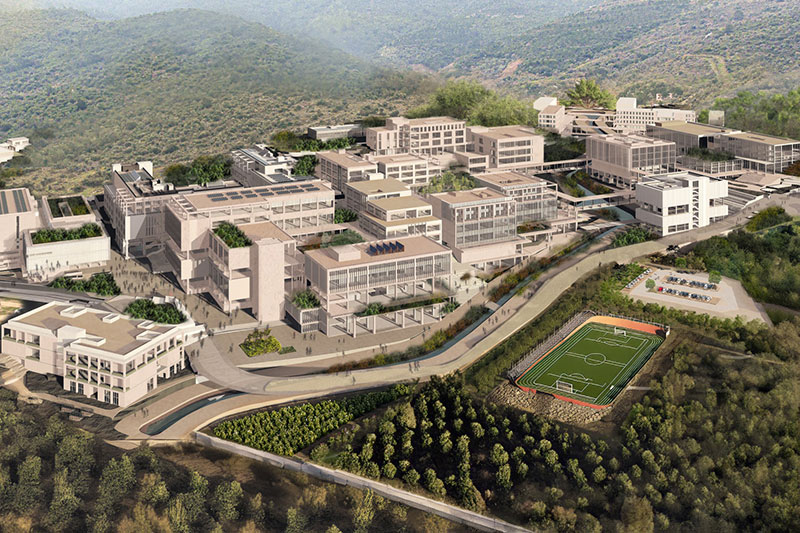
IZMIR UNIVERSITY OF ECONOMICS GÜZELBAHÇE CAMPUS
DetailsGLOBAL CAREER
As Izmir University of Economics transforms into a world-class university, it also raises successful young people with global competence.
More..CONTRIBUTION TO SCIENCE
Izmir University of Economics produces qualified knowledge and competent technologies.
More..VALUING PEOPLE
Izmir University of Economics sees producing social benefit as its reason for existence.
More..
You are one step ahead with your graduate education at Izmir University of Economics.