

- University
- Academic
- Schools/Vocational Schools
- Vocational School of Justice
- Vocational School
- Vocational School
- Department of Banking and Insurance (Turkish)
- Department of Computer Programming (Turkish)
- Department of Foreign Trade (Turkish)
- Department of Graphic Design (Turkish)
- Department of Interior Design (Turkish)
- Department of Construction Technology (Turkish)
- Department of Occupational Health and Safety (Turkish)
- Department of Media and Communication (Turkish)
- Department of Architectural Restoration (Turkish)
- Department of Radio and Tv Programming (Turkish)
- Department of Civil Aviation Cabin Services (Turkish)
- Department of Civil Aviation Transportation Management (Turkish)
- Department of Tourism and Hotel Management (Turkish)
- Department of Applied English Translation
- Vocational School Of Health Services
- Vocational School Of Health Services
- Department of Child Development (Turkish)
- Department of Physiotherapy (Turkish)
- Department of Paramedic (Turkish)
- Department of Opticianry (Turkish)
- Department of Medical Documentation and Secreteriat (Turkish)
- Department of Medical Imaging Techniques (Turkish)
- Department of Medical Laboratory Techniques (Turkish)
- Department of Elderly Care (Turkish)
- School of Applied Management Sciences
- School of Foreign Languages
- Faculties
- Faculty of Arts and Sciences
- Faculty of Fine Arts and Design
- Faculty of Law
- Faculty of Communication
- Faculty of Business
- Faculty of Engineering
- Faculty of Engineering
- Department of Computer Engineering
- Department of Biomedical Engineering
- Department of Electrical and Electronics Engineering
- Department of Industrial Engineering
- Department of Food Engineering
- Department of Genetics and Bioengineering
- Department of Aerospace Engineering
- Department of Civil Engineering
- Department of Mechanical Engineering
- Department of Mechatronics Engineering
- Department of Software Engineering
- Faculty of Health Sciences
- Medicine
- Graduate School
- Common Courses
- Schools/Vocational Schools
- Research
- Research Centers
- Library
- Smart Campus
- Technology Transfer Office
- İzmir Sciencepark
- Continuous Education Center (EKOSEM)
- Children's University
- Ethics Committee
- Teaching and Learning Center (EKOEĞİTİM)
- Psychology Application and Research Center
- Researcher Training Coordinatorship
- Research Collaborations And Innovation Coordinatorship
- Campus
- INTERNATIONAL
- Contact
- 25TH YEAR
VOCATIONAL SCHOOL OF HEALTH SERVICES
Department of Medical Imaging TechniquesTGT 209 | Course Introduction and Application Information
| Course Name |
Advanced CT and MRI Techniques
|
|
Code
|
Semester
|
Theory
(hour/week) |
Application/Lab
(hour/week) |
Local Credits
|
ECTS
|
|
TGT 209
|
Fall/Spring
|
2
|
0
|
2
|
3
|
| Prerequisites |
None
|
|||||
| Course Language |
Turkish
|
|||||
| Course Type |
Elective
|
|||||
| Course Level |
Short Cycle
|
|||||
| Mode of Delivery | - | |||||
| Teaching Methods and Techniques of the Course | Case StudyLecture / Presentation | |||||
| National Occupation Classification | - | |||||
| Course Coordinator | ||||||
| Course Lecturer(s) | - | |||||
| Assistant(s) | - | |||||
| Course Objectives | This course aims to teach advanced CT techniques. |
| Learning Outcomes |
The students who succeeded in this course;
|
| Course Description | This course includes; advanced CT and MRI techniques |
| Related Sustainable Development Goals |
|
|
|
Core Courses | |
| Major Area Courses |
X
|
|
| Supportive Courses | ||
| Media and Management Skills Courses | ||
| Transferable Skill Courses |
WEEKLY SUBJECTS AND RELATED PREPARATION STUDIES
| Week | Subjects | Related Preparation |
| 1 | Basic Concepts in CT and MRI and Introduction to Advanced Imaging | Fazıl Gelal, Mehmet Coşkun, Ali Fırat Sarp (Ed.), Radyoloji Fiziği, pp. 141–167; Nuran Akyurt (Ed.), Tıbbi Görüntüleme Yöntemleri, pp. 545–626 |
| 2 | Multidetector CT (MDCT) and Advanced CT Imaging Parameters | Nuran Akyurt (Ed.), Tıbbi Görüntüleme Yöntemleri, pp. 605–626; Tamer Kaya, Temel Radyoloji Tekniği, pp. 315–332 |
| 3 | Low-Dose Techniques in CT: Ultra-Low-Dose CT | Karaarslan E., Radyoloji Fiziği – Bilgisayarlı Tomografide Doz Hesaplama ve Düşük Doz Uygulamaları, pp. 92–100 |
| 4 | CT Angiography and Advanced Contrast-Enhanced CT Applications | Hakkı Koç, Dursun Aksu, Tıbbi Görüntüleme Tomografi & PET-CT Hasta Hazırlık ve Çekim Pozisyonları, pp. 5–249, relevant CT protocols; Nuran Akyurt (Ed.), Tıbbi Görüntüleme Yöntemleri, pp. 605–626 and 665–672 |
| 5 | Cardiac CT Applications | Hakkı Koç, Dursun Aksu, Tıbbi Görüntüleme Tomografi & PET-CT Hasta Hazırlık ve Çekim Pozisyonları, pp. 104–147 and relevant specialized CT protocols; Nuran Akyurt (Ed.), Tıbbi Görüntüleme Yöntemleri, pp. 605–626 |
| 6 | Dual-Energy / Spectral CT | Nuran Akyurt (Ed.), Tıbbi Görüntüleme Yöntemleri, pp. 605–626; current lecture notes / articles provided by the instructor |
| 7 | Quiz | |
| 8 | Midterm Examination | - |
| 9 | Advanced MRI Sequences and Imaging Parameters | Mehmet Coşkun, Barış Türkbey, “Manyetik Rezonans Görüntülemede Temel Sekanslar” in Radyoloji Fiziği, pp. 153–167; Nuran Akyurt (Ed.), Tıbbi Görüntüleme Yöntemleri, pp. 545–604 |
| 10 | Fat Suppression and Special Imaging Techniques in MRI | Fazıl Gelal, Mehmet Coşkun, Ali Fırat Sarp (Ed.), Radyoloji Fiziği, pp. 181–202; Nuran Akyurt (Ed.), Tıbbi Görüntüleme Yöntemleri, pp. 545–604 |
| 11 | Diffusion MRI and Diffusion Tensor Imaging | Fazıl Gelal, Mehmet Coşkun, Ali Fırat Sarp (Ed.), Radyoloji Fiziği, pp. 181–202; Nuran Akyurt (Ed.), Tıbbi Görüntüleme Yöntemleri, pp. 545–604 |
| 12 | MR Perfusion, MR Spectroscopy and Functional MRI | Fazıl Gelal, Mehmet Coşkun, Ali Fırat Sarp (Ed.), Radyoloji Fiziği, pp. 181–202; Nuran Akyurt (Ed.), Tıbbi Görüntüleme Yöntemleri, pp. 545–604 |
| 13 | MR Angiography and Cardiac MRI Techniques | Nuran Akyurt (Ed.), Tıbbi Görüntüleme Yöntemleri, pp. 545–604; Manyetik Rezonans Görüntüleme Teknikleri ve Temel Prensipleri, relevant sections on MRA and advanced MRI |
| 14 | MRI Safety, Artifacts and Imaging in Special Patient Groups | Fazıl Gelal, Mehmet Coşkun, Ali Fırat Sarp (Ed.), Radyoloji Fiziği, relevant sections on MRI image quality and artifacts; Nuran Akyurt (Ed.), Tıbbi Görüntüleme Yöntemleri, pp. 545–604 |
| 15 | Review of the semester | |
| 16 | Final Examination |
| Course Notes/Textbooks |
|
| Suggested Readings/Materials |
|
EVALUATION SYSTEM
| Semester Activities | Number | Weigthing |
| Participation |
1
|
5
|
| Laboratory / Application | ||
| Field Work | ||
| Quizzes / Studio Critiques |
1
|
15
|
| Portfolio | ||
| Homework / Assignments |
1
|
10
|
| Presentation / Jury | ||
| Project | ||
| Seminar / Workshop | ||
| Oral Exams | ||
| Midterm |
1
|
30
|
| Final Exam |
1
|
40
|
| Total |
| Weighting of Semester Activities on the Final Grade |
4
|
60
|
| Weighting of End-of-Semester Activities on the Final Grade |
1
|
40
|
| Total |
ECTS / WORKLOAD TABLE
| Semester Activities | Number | Duration (Hours) | Workload |
|---|---|---|---|
| Theoretical Course Hours (Including exam week: 16 x total hours) |
16
|
2
|
32
|
| Laboratory / Application Hours |
16
|
0
|
|
| Study Hours Out of Class |
0
|
||
| Field Work |
0
|
||
| Quizzes / Studio Critiques |
1
|
10
|
10
|
| Portfolio |
0
|
||
| Homework / Assignments |
2
|
5
|
10
|
| Presentation / Jury |
0
|
||
| Project |
0
|
||
| Seminar / Workshop |
0
|
||
| Oral Exam |
0
|
||
| Midterms |
1
|
14
|
14
|
| Final Exam |
1
|
24
|
24
|
| Total |
90
|
COURSE LEARNING OUTCOMES AND PROGRAM QUALIFICATIONS RELATIONSHIP
|
#
|
Program Competencies/Outcomes |
* Contribution Level
|
|||||
|
1
|
2
|
3
|
4
|
5
|
|||
| 1 |
To have the required contemporary theoretical and practical knowledge in his/her field. |
X
|
-
|
-
|
-
|
-
|
|
| 2 |
To use the material and technology related to his/her field, and make their maintenance, use the information and communication technologies at basic level. |
-
|
-
|
-
|
X
|
-
|
|
| 3 |
To have the competency to recognize the problems in his/her field, analyze them, develop evidence-based solutions and have the ability to share their suggestions with others. |
-
|
X
|
-
|
-
|
-
|
|
| 4 |
To be aware of legal responsibilities, conduct basic studies in her/his field independently. |
-
|
-
|
-
|
-
|
-
|
|
| 5 |
To communicate with patients, relatives and colleagues properly, comprehensively, honestly and explicitly, transfer his/her thoughts and knowledge through written and oral communication. |
-
|
-
|
-
|
-
|
-
|
|
| 6 |
To take responsibility as an active team member during the practices in his/her field. |
-
|
-
|
-
|
-
|
-
|
|
| 7 |
To commentate and evaluate the scientific information with a critical approach by the help of knowledge gained in his/her field. |
-
|
-
|
-
|
-
|
-
|
|
| 8 |
To comprehend the importance of lifelong learning, to determine and meet her/his learning needs, to develop herself/himself by monitoring the development in science and technology. |
X
|
-
|
-
|
-
|
-
|
|
| 9 |
To act by considering the universal ethical values, social and cultural characteristics. |
-
|
-
|
-
|
-
|
-
|
|
| 10 |
To know the concepts of occupational safety, patient safety, environmental protection and quality, and fulfill the requirements. |
-
|
-
|
-
|
-
|
-
|
|
| 11 |
To be able to follow information in his field and communicate with colleagues in English at least a level of European Language Portfolio A2 General Level. |
-
|
-
|
-
|
-
|
-
|
|
| 12 |
Explains radiation protection and radiation safety rules for patients and staff in medical imaging units and takes necessary precautions accordingly. |
-
|
-
|
-
|
-
|
-
|
|
| 13 |
Is capable of using X-ray based imaging devices (such as CT, CR and DR systems, mammography, etc.) as well as magnetic resonance imaging (MRI) devices in medical imaging units. |
-
|
-
|
-
|
-
|
-
|
|
*1 Lowest, 2 Low, 3 Average, 4 High, 5 Highest
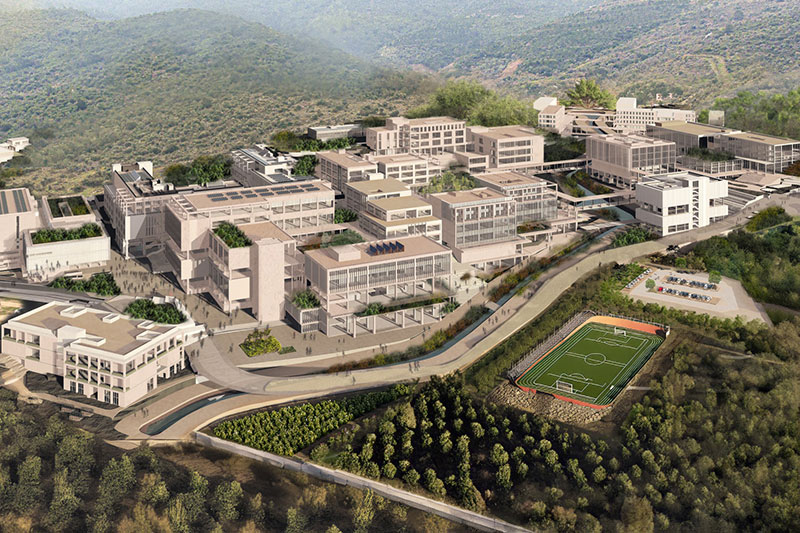
IZMIR UNIVERSITY OF ECONOMICS GÜZELBAHÇE CAMPUS
DetailsGLOBAL CAREER
As Izmir University of Economics transforms into a world-class university, it also raises successful young people with global competence.
More..CONTRIBUTION TO SCIENCE
Izmir University of Economics produces qualified knowledge and competent technologies.
More..VALUING PEOPLE
Izmir University of Economics sees producing social benefit as its reason for existence.
More..