

- University
- Academic
- Schools/Vocational Schools
- Vocational School of Justice
- Vocational School
- Vocational School
- Department of Banking and Insurance (Turkish)
- Department of Computer Programming (Turkish)
- Department of Foreign Trade (Turkish)
- Department of Graphic Design (Turkish)
- Department of Interior Design (Turkish)
- Department of Construction Technology (Turkish)
- Department of Occupational Health and Safety (Turkish)
- Department of Media and Communication (Turkish)
- Department of Architectural Restoration (Turkish)
- Department of Radio and Tv Programming (Turkish)
- Department of Civil Aviation Cabin Services (Turkish)
- Department of Civil Aviation Transportation Management (Turkish)
- Department of Tourism and Hotel Management (Turkish)
- Department of Applied English Translation
- Vocational School Of Health Services
- Vocational School Of Health Services
- Department of Child Development (Turkish)
- Department of Physiotherapy (Turkish)
- Department of Paramedic (Turkish)
- Department of Opticianry (Turkish)
- Department of Medical Documentation and Secreteriat (Turkish)
- Department of Medical Imaging Techniques (Turkish)
- Department of Medical Laboratory Techniques (Turkish)
- Department of Elderly Care (Turkish)
- School of Applied Management Sciences
- School of Foreign Languages
- Faculties
- Faculty of Arts and Sciences
- Faculty of Fine Arts and Design
- Faculty of Law
- Faculty of Communication
- Faculty of Business
- Faculty of Engineering
- Faculty of Engineering
- Department of Computer Engineering
- Department of Biomedical Engineering
- Department of Electrical and Electronics Engineering
- Department of Industrial Engineering
- Department of Food Engineering
- Department of Genetics and Bioengineering
- Department of Aerospace Engineering
- Department of Civil Engineering
- Department of Mechanical Engineering
- Department of Mechatronics Engineering
- Department of Software Engineering
- Faculty of Health Sciences
- Medicine
- Graduate School
- Common Courses
- Schools/Vocational Schools
- Research
- Research Centers
- Library
- Smart Campus
- Technology Transfer Office
- İzmir Sciencepark
- Continuous Education Center (EKOSEM)
- Children's University
- Ethics Committee
- Teaching and Learning Center (EKOEĞİTİM)
- Psychology Application and Research Center
- Researcher Training Coordinatorship
- Research Collaborations And Innovation Coordinatorship
- Campus
- INTERNATIONAL
- Contact
- 25TH YEAR
VOCATIONAL SCHOOL OF HEALTH SERVICES
Department of PhysiotherapyTS 221 | Course Introduction and Application Information
| Course Name |
Critical Thinking
|
|
Code
|
Semester
|
Theory
(hour/week) |
Application/Lab
(hour/week) |
Local Credits
|
ECTS
|
|
TS 221
|
Fall/Spring
|
2
|
0
|
2
|
3
|
| Prerequisites |
None
|
|||||
| Course Language |
Turkish
|
|||||
| Course Type |
Elective
|
|||||
| Course Level |
Short Cycle
|
|||||
| Mode of Delivery | - | |||||
| Teaching Methods and Techniques of the Course | DiscussionCase StudyCritical feedbackLecture / Presentation | |||||
| National Occupation Classification | - | |||||
| Course Coordinator | - | |||||
| Course Lecturer(s) | - | |||||
| Assistant(s) | - | |||||
| Course Objectives | The aim of this course is to provide students with critical thinking skills. |
| Learning Outcomes |
The students who succeeded in this course;
|
| Course Description | This course covers critical thinking, dimentions of critical thinking, affective and cognitive dimentions of critical thinking strategies. |
| Related Sustainable Development Goals |
|
|
|
Core Courses | |
| Major Area Courses | ||
| Supportive Courses | ||
| Media and Management Skills Courses | ||
| Transferable Skill Courses |
WEEKLY SUBJECTS AND RELATED PREPARATION STUDIES
| Week | Subjects | Related Preparation |
| 1 | Intoduction to course and critical thinking | |
| 2 | Why critical thinking is important? | Paul Richard, Elder Lında, Kritik Düşünce, (2013) Ankara: Nobel Yayıncılık. Giriş: xxi-xxxiv |
| 3 | Dimentions of critical thinking | Paul Richard, Elder Lında, Kritik Düşünce, (2013) Ankara: Nobel Yayıncılık. Ss. 57-90 |
| 4 | Standarts of Critical Thinking | Paul Richard, Elder Lında, Kritik Düşünce, (2013) Ankara: Nobel Yayıncılık. Ss. 91-122 |
| 5 | Ask questions to direct critical thinking | Paul Richard, Elder Lında, Kritik Düşünce, (2013) Ankara: Nobel Yayıncılık. Ss. 123-151 |
| 6 | Components of Thinking | Paul Richard, Elder Lında, Kritik Düşünce, (2013) Ankara: Nobel Yayıncılık. ss. 153-186 |
| 7 | Problem solving | Paul Richard, Elder Lında, Kritik Düşünce, (2013) Ankara: Nobel Yayıncılık. Ss. 197-222 |
| 8 | Midterm Exam | |
| 9 | Critical reading Critical listening | Aytan, Necmi, Yaratıcı Okuma, (2015), Ankara: Nobel Yayıncılık. Ss 25-70 |
| 10 | Logical thinking and illogical thinking | Paul Richard, Elder Lında, Kritik Düşünce, (2013) Ankara: Nobel Yayıncılık. Ss.223-260 |
| 11 | Strategic Thinking I | Paul Richard, Elder Lında, Kritik Düşünce, (2013) Ankara: Nobel Yayıncılık. Ss. 367-381 |
| 12 | Strategic Thinking II | Paul Richard, Elder Lında, Kritik Düşünce, (2013) Ankara: Nobel Yayıncılık, ss.383-399 |
| 13 | Sample cases, discussion | Aytan, Necmi, Yaratıcı Okuma, (2015), Ankara: Nobel Yayıncılık. Ss. 99-129 |
| 14 | Sample cases, discussion | Aytan, Necmi, Yaratıcı Okuma, (2015), Ankara: Nobel Yayıncılık. Ss. 99-129 |
| 15 | Review – General discussion | The textbooks referenced below and course slides |
| 16 | Final |
| Course Notes/Textbooks | Paul Richard, Elder Linda, Kritik Düşünce, (2013) Ankara: Nobel Yayıncılık. ISBN: 9786051335759 Aytan, Necmi, Yaratıcı Okuma, (2015), Ankara: Nobel Yayıncılık ISBN: 9786053201175 |
| Suggested Readings/Materials | 1. S. Sadi SEFEROGLU. CenkAKBIYIK / H.Ü. Eğitim Fakültesi Dergisi (H.U. Journal of Education). 30 (2006) 193-200 2. Eleştirel Düşünme, Prof. Dr. İpek Gürkaynak, Prof. Dr. Füsun Üstel, Prof. Dr. Sami Gülgöz, Erg Eğitim Reformu Girişimi, 2008, Sabancı Üniversitesi 3. Kurnaz, Ahmet, Eleştirel Düşünme Öğretimi Etkinlikleri Planlama - Uygulama ve Değerlendirme, (2011) Konya: Eğitim Kitabevi 4. Nosich M. Gerald, Eleştirel Düşünme ve Disiplinlerarası Eleştirel Düşünme Rehberi, Çev. Aybek Birsel, (2000) Ankara: Anı Yayıncılık 5. Aybek Birsel, Örneklerle Düşünme ve Eleştirel Düşünme, (2010) Adana: Nobel Kitabevi |
EVALUATION SYSTEM
| Semester Activities | Number | Weigthing |
| Participation |
1
|
5
|
| Laboratory / Application | ||
| Field Work | ||
| Quizzes / Studio Critiques | ||
| Portfolio | ||
| Homework / Assignments |
1
|
20
|
| Presentation / Jury | ||
| Project | ||
| Seminar / Workshop | ||
| Oral Exams | ||
| Midterm |
1
|
35
|
| Final Exam |
1
|
40
|
| Total |
| Weighting of Semester Activities on the Final Grade |
3
|
60
|
| Weighting of End-of-Semester Activities on the Final Grade |
1
|
40
|
| Total |
ECTS / WORKLOAD TABLE
| Semester Activities | Number | Duration (Hours) | Workload |
|---|---|---|---|
| Theoretical Course Hours (Including exam week: 16 x total hours) |
16
|
2
|
32
|
| Laboratory / Application Hours |
16
|
0
|
|
| Study Hours Out of Class |
14
|
1
|
14
|
| Field Work |
0
|
||
| Quizzes / Studio Critiques |
0
|
||
| Portfolio |
0
|
||
| Homework / Assignments |
1
|
15
|
15
|
| Presentation / Jury |
0
|
||
| Project |
0
|
||
| Seminar / Workshop |
0
|
||
| Oral Exam |
0
|
||
| Midterms |
1
|
12
|
12
|
| Final Exam |
1
|
14
|
14
|
| Total |
87
|
COURSE LEARNING OUTCOMES AND PROGRAM QUALIFICATIONS RELATIONSHIP
|
#
|
Program Competencies/Outcomes |
* Contribution Level
|
|||||
|
1
|
2
|
3
|
4
|
5
|
|||
| 1 |
Demonstrates up-to-date theoretical and practical knowledge required in the field and applies physiotherapy methods used in related diseases. |
X
|
-
|
-
|
-
|
-
|
|
| 2 |
Uses field-related tools, equipment, and technologies, maintains them properly, and utilizes basic information and communication technologies. |
-
|
-
|
-
|
-
|
-
|
|
| 3 |
Independently identifies problems related to the field, analyzes them through analytical and critical approaches, develops evidence-based solution proposals, and shares these proposals with others. |
X
|
-
|
-
|
-
|
-
|
|
| 4 |
Is aware of legal responsibilities and can independently carry out basic-level professional tasks in the field. |
-
|
-
|
-
|
-
|
-
|
|
| 5 |
Establishes accurate, clear, honest, and open communication with patients, patients’ relatives, and colleagues, and effectively conveys ideas and knowledge through written and verbal communication. |
-
|
-
|
-
|
-
|
-
|
|
| 6 |
Takes responsibility as an active team member in solving complex and unforeseen problems encountered in field-related practices. |
-
|
X
|
-
|
-
|
-
|
|
| 7 |
Uses acquired knowledge in the field to critically interpret and evaluate scientific data. |
-
|
X
|
-
|
-
|
-
|
|
| 8 |
Recognizes the importance of career management and lifelong learning; identifies and meets learning needs, and follows and effectively applies scientific and technological developments required by the profession. |
-
|
-
|
-
|
-
|
-
|
|
| 9 |
Acts in accordance with social, cultural, scientific, and universal ethical values; preserves and maintains the ethical principles and standards required by the profession at every stage. |
-
|
X
|
-
|
-
|
-
|
|
| 10 |
Has knowledge of occupational health and safety, environmental awareness, quality processes, and patient safety concepts, and fulfills their requirements. |
-
|
-
|
-
|
-
|
-
|
|
| 11 |
To be able to follow information in his field and communicate with colleagues in English at least a level of European Language Portfolio A2 General Level |
-
|
-
|
-
|
-
|
-
|
|
| 12 |
Knows the legal obligations of the physiotherapy profession and, within this framework, performs physiotherapy practices under the supervision of relevant specialists and within the limits defined by professional legislation. |
-
|
-
|
-
|
-
|
-
|
|
| 13 |
Determines the roles of individuals under their responsibility within the treatment organization, makes appropriate planning, and manages these processes effectively. |
-
|
-
|
-
|
-
|
-
|
|
*1 Lowest, 2 Low, 3 Average, 4 High, 5 Highest
NEWSALL NEWS
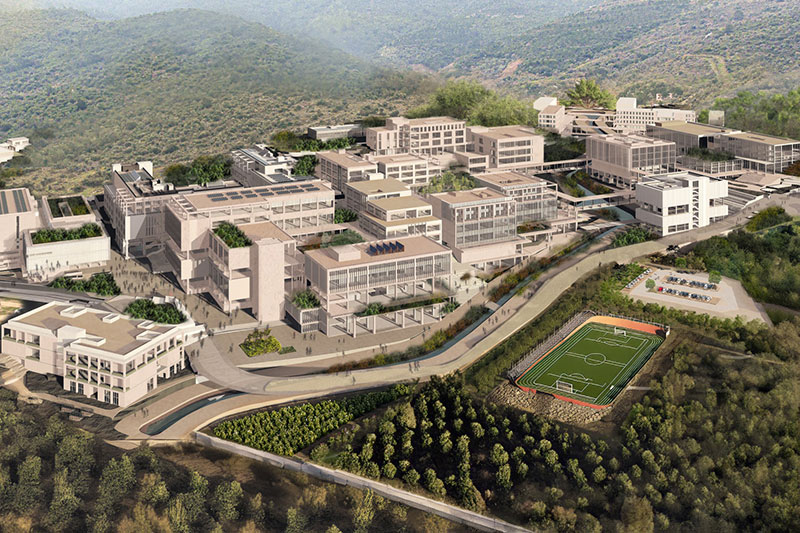
IZMIR UNIVERSITY OF ECONOMICS GÜZELBAHÇE CAMPUS
DetailsGLOBAL CAREER
As Izmir University of Economics transforms into a world-class university, it also raises successful young people with global competence.
More..CONTRIBUTION TO SCIENCE
Izmir University of Economics produces qualified knowledge and competent technologies.
More..VALUING PEOPLE
Izmir University of Economics sees producing social benefit as its reason for existence.
More..
You are one step ahead with your graduate education at Izmir University of Economics.