

- University
- Academic
- Schools/Vocational Schools
- Vocational School of Justice
- Vocational School
- Vocational School
- Department of Banking and Insurance (Turkish)
- Department of Computer Programming (Turkish)
- Department of Foreign Trade (Turkish)
- Department of Graphic Design (Turkish)
- Department of Interior Design (Turkish)
- Department of Construction Technology (Turkish)
- Department of Occupational Health and Safety (Turkish)
- Department of Media and Communication (Turkish)
- Department of Architectural Restoration (Turkish)
- Department of Radio and Tv Programming (Turkish)
- Department of Civil Aviation Cabin Services (Turkish)
- Department of Civil Aviation Transportation Management (Turkish)
- Department of Tourism and Hotel Management (Turkish)
- Department of Applied English Translation
- Vocational School Of Health Services
- Vocational School Of Health Services
- Department of Child Development (Turkish)
- Department of Physiotherapy (Turkish)
- Department of Paramedic (Turkish)
- Department of Opticianry (Turkish)
- Department of Medical Documentation and Secreteriat (Turkish)
- Department of Medical Imaging Techniques (Turkish)
- Department of Medical Laboratory Techniques (Turkish)
- Department of Elderly Care (Turkish)
- School of Applied Management Sciences
- School of Foreign Languages
- Faculties
- Faculty of Arts and Sciences
- Faculty of Fine Arts and Design
- Faculty of Law
- Faculty of Communication
- Faculty of Business
- Faculty of Engineering
- Faculty of Engineering
- Department of Computer Engineering
- Department of Biomedical Engineering
- Department of Electrical and Electronics Engineering
- Department of Industrial Engineering
- Department of Food Engineering
- Department of Genetics and Bioengineering
- Department of Aerospace Engineering
- Department of Civil Engineering
- Department of Mechanical Engineering
- Department of Mechatronics Engineering
- Department of Software Engineering
- Faculty of Health Sciences
- Medicine
- Graduate School
- Common Courses
- Schools/Vocational Schools
- Research
- Research Centers
- Library
- Smart Campus
- Technology Transfer Office
- İzmir Sciencepark
- Continuous Education Center (EKOSEM)
- Children's University
- Ethics Committee
- Teaching and Learning Center (EKOEĞİTİM)
- Psychology Application and Research Center
- Researcher Training Coordinatorship
- Research Collaborations And Innovation Coordinatorship
- Campus
- INTERNATIONAL
- Contact
- 25TH YEAR
VOCATIONAL SCHOOL OF HEALTH SERVICES
Department of PhysiotherapyTDS 214 | Course Introduction and Application Information
| Course Name |
Written Expression
|
|
Code
|
Semester
|
Theory
(hour/week) |
Application/Lab
(hour/week) |
Local Credits
|
ECTS
|
|
TDS 214
|
Fall/Spring
|
2
|
0
|
2
|
3
|
| Prerequisites |
None
|
|||||
| Course Language |
Turkish
|
|||||
| Course Type |
Elective
|
|||||
| Course Level |
Short Cycle
|
|||||
| Mode of Delivery | - | |||||
| Teaching Methods and Techniques of the Course | DiscussionLecture / Presentation | |||||
| National Occupation Classification | - | |||||
| Course Coordinator | ||||||
| Course Lecturer(s) | ||||||
| Assistant(s) | - | |||||
| Course Objectives | The aim of the course is to teach the types of written expression, and to improve the written expression skills and writing skills of the students. |
| Learning Outcomes |
The students who succeeded in this course;
|
| Course Description | The rules of written communication, features of written language, expression disturbances which could be done in texts, writing a composition, types of texts, techniques of taking note and summarizing |
| Related Sustainable Development Goals |

|
|
|
Core Courses | |
| Major Area Courses | ||
| Supportive Courses | ||
| Media and Management Skills Courses | ||
| Transferable Skill Courses |
WEEKLY SUBJECTS AND RELATED PREPARATION STUDIES
| Week | Subjects | Related Preparation |
| 1 | Introduction: Course objectives and goals The concept and process of communication The relationship between language, thought, and expression in communication The place of oral and written expression in communication | |
| 2 | Written language and its features Principles of written expression Expression disorders and their causes | Editörler: Doç. Dr. Mehmet Nuri KARDAŞ, Doç. Dr. Raşit KOÇ, Türk Dili 1 Yazma Eğitimi, PEGEM AKADEMİ, ISNB 978-625-8325-06-5 Sf.28-45 |
| 3 | Punctuation Marks and Spelling Rules | Editörler: Doç. Dr. Mehmet Nuri KARDAŞ, Doç. Dr. Raşit KOÇ, Türk Dili 1 Yazma Eğitimi, PEGEM AKADEMİ, ISNB 978-625-8325-06-5 Sf.50-71 |
| 4 | Punctuation Marks and Spelling Rules | Editörler: Doç. Dr. Mehmet Nuri KARDAŞ, Doç. Dr. Raşit KOÇ, Türk Dili 1 Yazma Eğitimi, PEGEM AKADEMİ, ISNB 978-625-8325-06-5 Sf.50-71 |
| 5 | Features of Written and Oral Expression | Editörler: Doç. Dr. Mehmet Nuri KARDAŞ, Doç. Dr. Raşit KOÇ, Türk Dili 1 Yazma Eğitimi, PEGEM AKADEMİ, ISNB 978-625-8325-06-5 Sf.74-91 |
| 6 | Paragraph Structure and Methods of Developing Ideas | Editörler: Doç. Dr. Mehmet Nuri KARDAŞ, Doç. Dr. Raşit KOÇ, Türk Dili 1 Yazma Eğitimi, PEGEM AKADEMİ, ISNB 978-625-8325-06-5 Sf. 96-123 |
| 7 | Text Structure, Writing Methods and Techniques / Modes of Expression | Editörler: Doç. Dr. Mehmet Nuri KARDAŞ, Doç. Dr. Raşit KOÇ, Türk Dili 1 Yazma Eğitimi, PEGEM AKADEMİ, ISNB 978-625-8325-06-5 Sf. 188-222 |
| 8 | Midterm | |
| 9 | Types of Written Expression: Intellectual texts Artistic texts Correspondence (personal, official, business letters; writing petitions) | |
| 10 | Types of Written Expression: Correspondence (CV, cover letter, minutes/reports, etc.) | |
| 11 | Oral Expression: Diction (Pronunciation, stress, pause, intonation) | |
| 12 | Preparing Presentations: Creating effective slides | |
| 13 | Assignment Presentations | |
| 14 | Assignment Presentations | |
| 15 | General review | |
| 16 | Final exam |
| Course Notes/Textbooks | Editörler: Doç. Dr. Mehmet Nuri KARDAŞ, Doç. Dr. Raşit KOÇ, Türk Dili 1 Yazma Eğitimi, PEGEM AKADEMİ, ISNB 978-625-8325-06-5 |
| Suggested Readings/Materials | Yazılı Ve Sözlü Anlatım, Şerif Aktaş, Osman Gündüz Yazılı Anlatım, Hüseyin Ağca Sözlü Ve Yazılı Anlatım Etkinlikleri, Yavuz Bayram İyi Ve Doğru Yazma Usulleri, F. Abdullah Tansel |
EVALUATION SYSTEM
| Semester Activities | Number | Weigthing |
| Participation |
1
|
5
|
| Laboratory / Application | ||
| Field Work | ||
| Quizzes / Studio Critiques | ||
| Portfolio | ||
| Homework / Assignments |
1
|
30
|
| Presentation / Jury | ||
| Project | ||
| Seminar / Workshop | ||
| Oral Exams | ||
| Midterm |
1
|
30
|
| Final Exam |
1
|
35
|
| Total |
| Weighting of Semester Activities on the Final Grade |
3
|
65
|
| Weighting of End-of-Semester Activities on the Final Grade |
1
|
35
|
| Total |
ECTS / WORKLOAD TABLE
| Semester Activities | Number | Duration (Hours) | Workload |
|---|---|---|---|
| Theoretical Course Hours (Including exam week: 16 x total hours) |
16
|
2
|
32
|
| Laboratory / Application Hours |
16
|
0
|
|
| Study Hours Out of Class |
0
|
||
| Field Work |
0
|
||
| Quizzes / Studio Critiques |
0
|
||
| Portfolio |
0
|
||
| Homework / Assignments |
3
|
4
|
12
|
| Presentation / Jury |
0
|
||
| Project |
0
|
||
| Seminar / Workshop |
0
|
||
| Oral Exam |
0
|
||
| Midterms |
1
|
20
|
20
|
| Final Exam |
1
|
26
|
26
|
| Total |
90
|
COURSE LEARNING OUTCOMES AND PROGRAM QUALIFICATIONS RELATIONSHIP
|
#
|
Program Competencies/Outcomes |
* Contribution Level
|
|||||
|
1
|
2
|
3
|
4
|
5
|
|||
| 1 |
Demonstrates up-to-date theoretical and practical knowledge required in the field and applies physiotherapy methods used in related diseases. |
-
|
-
|
-
|
-
|
-
|
|
| 2 |
Uses field-related tools, equipment, and technologies, maintains them properly, and utilizes basic information and communication technologies. |
-
|
-
|
-
|
-
|
-
|
|
| 3 |
Independently identifies problems related to the field, analyzes them through analytical and critical approaches, develops evidence-based solution proposals, and shares these proposals with others. |
-
|
-
|
-
|
-
|
-
|
|
| 4 |
Is aware of legal responsibilities and can independently carry out basic-level professional tasks in the field. |
-
|
-
|
-
|
-
|
-
|
|
| 5 |
Establishes accurate, clear, honest, and open communication with patients, patients’ relatives, and colleagues, and effectively conveys ideas and knowledge through written and verbal communication. |
-
|
-
|
-
|
X
|
-
|
|
| 6 |
Takes responsibility as an active team member in solving complex and unforeseen problems encountered in field-related practices. |
-
|
-
|
-
|
-
|
-
|
|
| 7 |
Uses acquired knowledge in the field to critically interpret and evaluate scientific data. |
-
|
X
|
-
|
-
|
-
|
|
| 8 |
Recognizes the importance of career management and lifelong learning; identifies and meets learning needs, and follows and effectively applies scientific and technological developments required by the profession. |
-
|
X
|
-
|
-
|
-
|
|
| 9 |
Acts in accordance with social, cultural, scientific, and universal ethical values; preserves and maintains the ethical principles and standards required by the profession at every stage. |
-
|
-
|
-
|
-
|
-
|
|
| 10 |
Has knowledge of occupational health and safety, environmental awareness, quality processes, and patient safety concepts, and fulfills their requirements. |
-
|
-
|
-
|
-
|
-
|
|
| 11 |
To be able to follow information in his field and communicate with colleagues in English at least a level of European Language Portfolio A2 General Level |
-
|
-
|
-
|
-
|
-
|
|
| 12 |
Knows the legal obligations of the physiotherapy profession and, within this framework, performs physiotherapy practices under the supervision of relevant specialists and within the limits defined by professional legislation. |
-
|
-
|
-
|
-
|
-
|
|
| 13 |
Determines the roles of individuals under their responsibility within the treatment organization, makes appropriate planning, and manages these processes effectively. |
-
|
-
|
-
|
-
|
-
|
|
*1 Lowest, 2 Low, 3 Average, 4 High, 5 Highest
NEWSALL NEWS
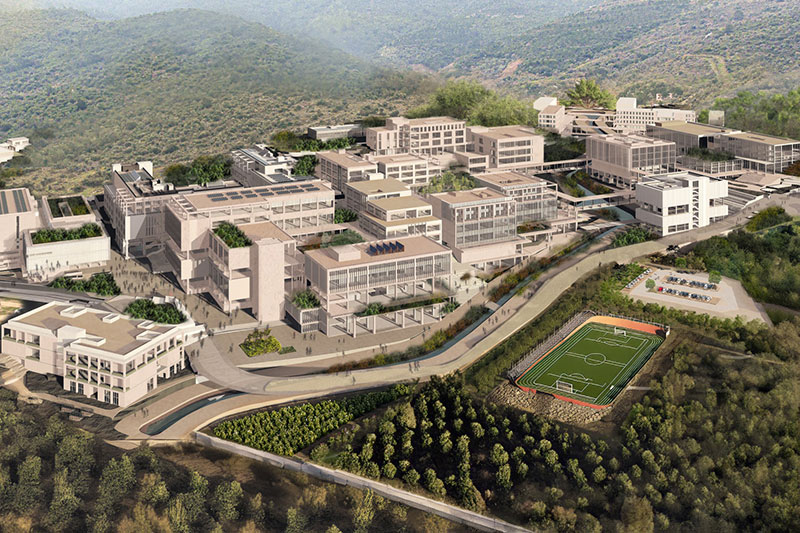
IZMIR UNIVERSITY OF ECONOMICS GÜZELBAHÇE CAMPUS
DetailsGLOBAL CAREER
As Izmir University of Economics transforms into a world-class university, it also raises successful young people with global competence.
More..CONTRIBUTION TO SCIENCE
Izmir University of Economics produces qualified knowledge and competent technologies.
More..VALUING PEOPLE
Izmir University of Economics sees producing social benefit as its reason for existence.
More..
You are one step ahead with your graduate education at Izmir University of Economics.